How to Get Cited by LLMs (ChatGPT, Perplexity, AI Overviews)
A practical checklist for getting your pages cited by ChatGPT, Perplexity, Claude, and Google AI Overviews, plus the popular tactics that don't work.

Updated 7 min read
- Author
- Published
- Updated
- Reading time
- 7 min
You ask ChatGPT or Perplexity a question you've written a great post about, and the answer cites three other sites. Your page isn't there.
To get cited by LLMs, make sure the AI search crawlers can reach your site, rank for the question and its close variations, put a direct answer in the first few sentences, back it with specific sourced facts, and get mentioned on the sites AI tools already trust, like Reddit and YouTube. Every major AI answer engine searches the web first and quotes the cleanest passage it finds, so the job is to be findable and then easy to quote.
If you want the bigger picture of how this differs from regular search work, start with SEO vs GEO. This post is the hands-on checklist.
How AI tools decide what to cite
When ChatGPT search, Perplexity, Claude, Copilot, or Google's AI Overviews answer a question, they run one or more web searches, read the top results, and quote the passages that answer the question best. Google says its AI features use the same core ranking systems as regular search and have no extra technical requirements beyond being indexed and snippet-eligible (Google Search Central).
So citation has two gates. Your page has to be in the pool the engine retrieves, and then one of its passages has to be the clearest answer in that pool.
1. Let the AI search crawlers in
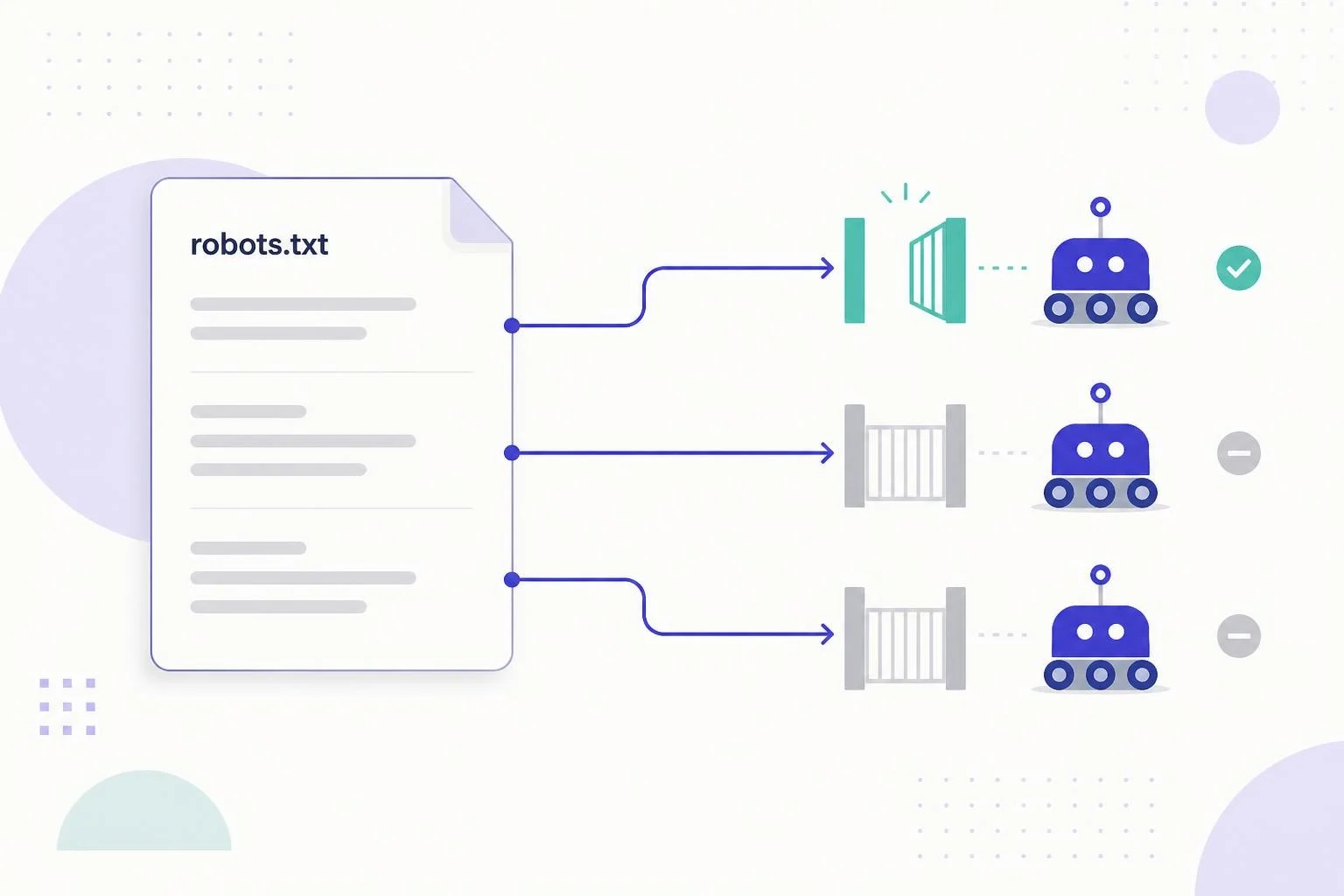
Each AI tool uses its own crawler for search, and these are separate from the crawlers that collect training data. Check your robots.txt, and your firewall or CDN bot settings, for these:
AI tool | Search crawler to allow | Training crawler (optional to block) |
|---|---|---|
ChatGPT search | OAI-SearchBot | GPTBot |
Claude | Claude-SearchBot | ClaudeBot |
Perplexity | PerplexityBot | None listed |
Copilot | Bingbot | None |
Google AI Overviews, AI Mode, Gemini | Googlebot | Google-Extended (a control token, not a crawler) |
Blocking GPTBot or ClaudeBot does not remove you from ChatGPT or Claude search results, per OpenAI and Anthropic. Blocking OAI-SearchBot or Claude-SearchBot does. Our WordPress robots.txt guide has copy-paste rules.
For Google, two more things decide eligibility. The page can't carry nosnippet or a tiny max-snippet value, and your site must not be opted out of generative AI features. Search Console began rolling out that opt-out setting in June 2026, so check it if you have access.
2. Rank for the question and its variations
AI tools rarely cite pages they can't find through search. They also don't just search your exact question. Google calls it query fan-out: the engine runs several related searches and pulls sources from each.
That's why an Ahrefs study from March 2026 found only 37.9% of AI Overview citations came from the top 10 for the original query. Pages earned citations by ranking for related sub-questions. The practical move is to cover the obvious follow-up questions inside the same page, briefly, instead of chasing only the head keyword.
3. Put the answer in the first few sentences
Write the direct answer to the page's main question in the opening, in 40 to 60 words, with no setup. Then do the same at the top of each H2: one or two sentences that answer that section's question on their own before the detail.
AI tools quote passages, not pages. A sentence that only makes sense after three paragraphs of context is hard to lift. A Semrush study of 304,805 AI-cited URLs found clear summaries, Q&A formatting, and clean section structure were among the content traits most associated with citation.
4. Make claims specific and sourced
Vague sentences don't get quoted. Compare:
- "Most AI citations come from top-ranking pages." (Not quotable, and now wrong.)
- "Ahrefs found 37.9% of AI Overview citations come from the top 10 organic results." (Quotable, dated, sourced.)
Use numbers, names, versions, and dates, and link the primary source. The original GEO research paper found that adding statistics, quotations, and cited sources raised a page's visibility in generated answers by up to 40% in its test setup. Comparison tables help too, because readers choosing between options are exactly who AI tools are answering.
5. Keep one page focused on one question
A page that answers one question well is easier to cite than a sprawling guide that touches twenty topics. If a section is really a separate question with its own audience, it may deserve its own post.
Don't go the other way and spin up a page for every phrasing of a question. Google's AI optimization guidance says that falls under its scaled content abuse policy.
6. Show who wrote it and when
AI tools, like people, prefer sources that are safe to repeat. Put a real author name on the post with a short bio that explains why they know the topic. Show a visible "last updated" date, and only change it when the content actually changed.
Freshness matters more here than in Google's regular results. Ahrefs found that ChatGPT and Perplexity cite newer pages than Google's organic results do. A content audit is the easiest way to find posts with stale facts.
7. Get mentioned where AI tools look
AI answers draw heavily on third-party sites. In Ahrefs' tracking of AI Overview citations, YouTube and Reddit were the two most-cited domains, at 24.5% and 18.1% of citations in its November 2026 US data.
That means off-site work counts:
- Answer questions in the subreddits where your audience asks them, without spamming links.
- Publish a short YouTube video for your most important topics.
- Get listed in roundups, comparisons, and reviews on other sites.
- Earn backlinks from relevant publishers, which also helps you rank.
8. Keep the content in the HTML
Some AI crawlers don't run JavaScript, so text that only appears after scripts load may be invisible to them. A quick check: view the page source (not the inspector) and search for a sentence from your main answer. If it's there, crawlers can read it.
This is rarely a problem on a standard WordPress site, since posts are rendered on the server. It does bite page builders that load content in tabs, accordions, or sliders through scripts, and sites built as JavaScript apps.
9. Measure citations, not only clicks
AI citations send far fewer clicks than they earn impressions, so track visibility directly:
- Google Search Console's generative AI performance reports show impressions in AI Overviews and AI Mode, with no click data.
- Bing Webmaster Tools' AI Performance report shows Copilot citations and the queries behind them.
- In GA4, put referrals from chatgpt.com, perplexity.ai, claude.ai, gemini.google.com, and copilot.microsoft.com in their own channel.
- Once a month, run your 10 to 20 key questions in each tool and note who gets cited.
What doesn't help
Plenty of AI SEO advice has no support from the engines themselves:
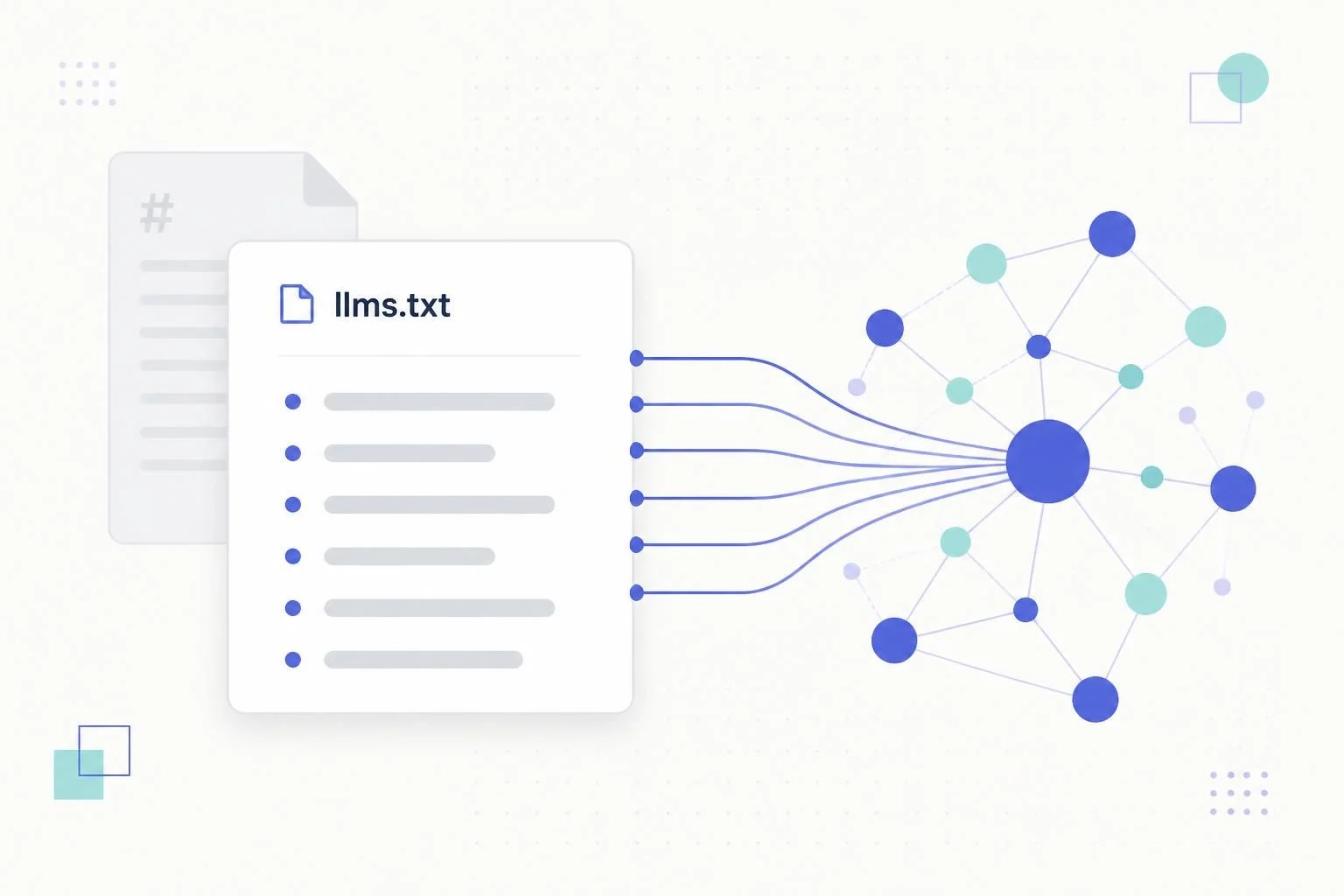
- An llms.txt file. Google says Search doesn't use it, and no major AI assistant has confirmed reading it for answers. Our llms.txt guide covers when it's still worth ten minutes.
- Schema added just for AI. Ahrefs tested 1,885 pages that added JSON-LD and found "no major uplift in citations on any platform." Keep schema for regular rich results.
- Rewriting everything into tiny chunks or a special "AI style." Google says it isn't needed.
A video walkthrough
If you prefer video, this third-party walkthrough from Vasco's SEO Tips covers similar ground with ChatGPT examples.
Frequently asked questions
How long does it take to get cited by ChatGPT?
For ChatGPT search and Perplexity, a page can be cited as soon as it's indexed by their search and ranks for the question. Getting into a model's built-in knowledge takes much longer, since that depends on future training runs you can't control.
Do I need to rank #1 on Google to appear in AI Overviews?
No. Most AI Overview citations in Ahrefs' 2026 data came from outside the top 10 for the original query. You do need to rank somewhere for the related searches the AI runs.
Does blocking GPTBot hurt my ChatGPT visibility?
It shouldn't. OpenAI uses GPTBot for training and OAI-SearchBot for ChatGPT search, and they're controlled separately. Leave OAI-SearchBot allowed if you want to be cited.
The short version
AI tools cite pages they can reach, find through search, and quote cleanly. Allow the search crawlers, rank for the question and its follow-ups, answer first, back claims with specific sources, keep pages focused and current, and get mentioned on Reddit, YouTube, and other sites in your niche. Skip llms.txt and AI-only schema until the engines say they use them.