How to Find the Sitemap of Any Website (5 Methods)
Find any website's XML sitemap in under a minute: check robots.txt, try the common URLs, or use Search Console. Includes WordPress sitemap locations.

Updated 6 min read
- Author
- Published
- Updated
- Reading time
- 6 min
You need a site's sitemap, maybe to submit your own to Google, maybe to see how many pages a competitor has, and /sitemap.xml returned a 404. The sitemap almost certainly exists. It just lives somewhere else.
The quickest fix: open example.com/robots.txt and look for a line starting with Sitemap:. If that comes up empty, try the common URLs below. Between those two checks you will find most sitemaps in under a minute.
What is a sitemap?
An XML sitemap is a file that lists the pages a site owner wants search engines to discover. Each entry has a URL and usually a last-modified date. Some also carry priority and change frequency values, but Google's sitemap documentation says it ignores both. It does use <lastmod> when the dates are consistently accurate.
When people say "sitemap" they can mean one of two things. The XML sitemap is the machine-readable file search engines read. An HTML sitemap is a regular page that links to every post, usually from the footer. The XML version is the one that matters for SEO; HTML sitemaps are optional.
Most platforms generate an XML sitemap automatically: WordPress (through core or an SEO plugin), Shopify, Squarespace, and Webflow all do. So the question is rarely whether a site has one, but where it is.
Method 1: Check the robots.txt file
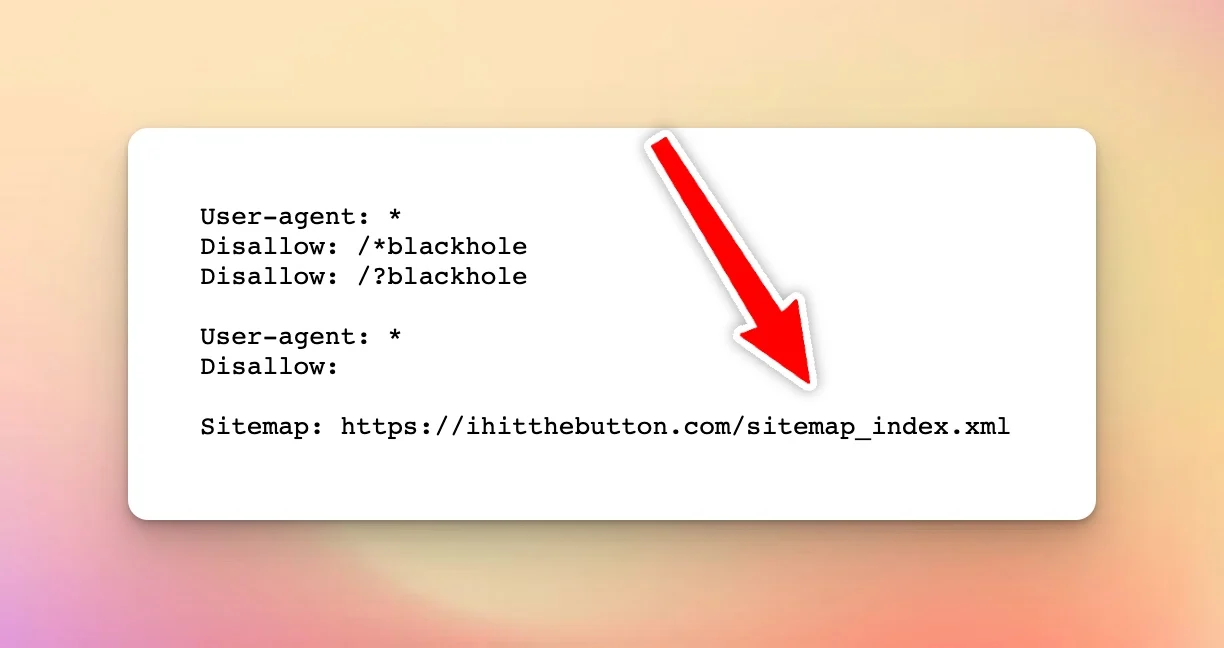
This is the most reliable method because it shows you the URL the owner chose to declare, whatever it is named.
- Go to the site's homepage.
- Add
/robots.txtafter the domain (for example,example.com/robots.txt). - Look for a line starting with
Sitemap:followed by a full URL.
Large sites often list several Sitemap: lines, one each for news, images, video, or products. Copy all of them. A news sitemap and a product sitemap tell you different things than the main content sitemap.
Listing a sitemap in robots.txt is optional. Google accepts sitemaps through Search Console, its API, or robots.txt, so a missing Sitemap: line does not mean a missing sitemap. Move on to Method 2.
Method 2: Try the common URLs
Add one of these paths to the end of the domain:
/sitemap.xml
/sitemap_index.xml
/sitemap-index.xml
/wp-sitemap.xml
/sitemaps.xml
/sitemap
Most sitemaps you find this way are index files that link to smaller sitemaps split by content type (posts, pages, products, categories). That is normal, and on a big site it is required, as explained further down.
Method 3: Check Search Console (your own site only)
For your own site, open Google Search Console and go to Indexing > Sitemaps. You will see each sitemap's status, when Google last read it, and how many URLs it found.
One catch: the Sitemaps report only lists sitemaps submitted through Search Console or its API. A sitemap Google found through robots.txt will not appear there, even though Google uses it. If the report is empty, submit your sitemap URL once so you can track errors and see how many of its URLs are indexed.
Method 4: Search Google for it
Google sometimes indexes sitemap files. Try a search like:
site:example.com filetype:xml
site:example.com inurl:sitemap
This is hit or miss, because many sites keep sitemaps out of the index. It is most useful for spotting extra sitemaps the robots.txt file does not mention.
Method 5: Check the footer or page source
- Scroll to the footer and look for a "Sitemap" link. It usually leads to an HTML sitemap, which still lists the site's pages.
- View the page source (right-click, then View Page Source) and search for
sitemap.
This rarely turns up an XML sitemap that Methods 1 and 2 missed, but it costs ten seconds.
If none of these work, the site may simply not have a public sitemap. Owners can name the file anything and submit it privately in Search Console without listing it anywhere you can see.
Where WordPress puts your sitemap
On WordPress, the location depends on what generates the sitemap:
Generated by | Sitemap URL |
|---|---|
WordPress core (5.5 and later, no SEO plugin) |
|
Yoast SEO |
|
Rank Math |
|
All in One SEO |
|
When one of these SEO plugins is active, it turns off the core sitemap, so do not be surprised when /wp-sitemap.xml stops working on a site running Yoast. Whichever sitemap is live should also be declared in your robots.txt file, which is the fastest way to confirm which plugin is in charge.
What a sitemap looks like
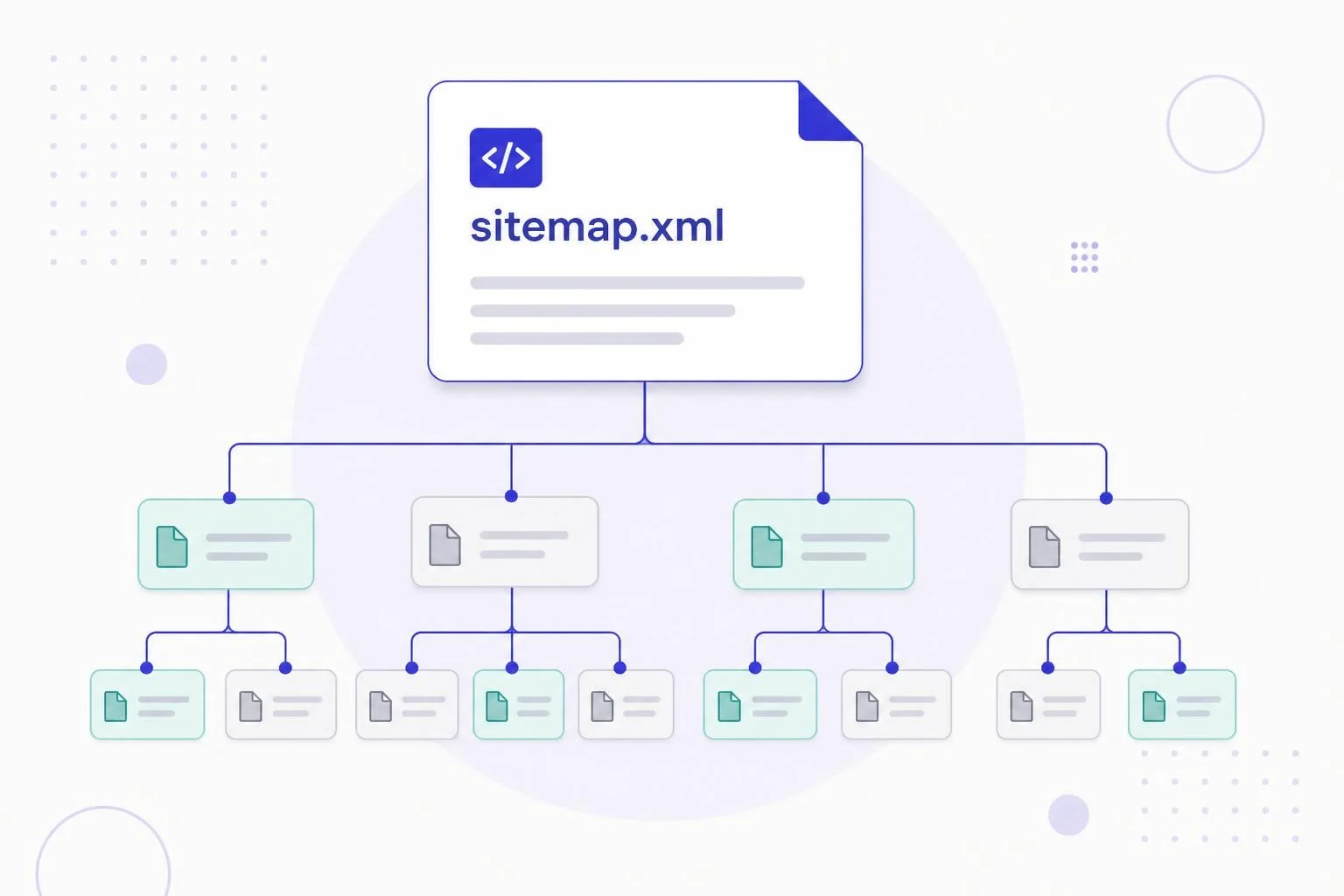
Open one and you will usually hit an index file rather than a list of pages. A sitemap index is a sitemap of sitemaps:
<sitemapindex>
  <sitemap><loc>https://example.com/post-sitemap.xml</loc></sitemap>
  <sitemap><loc>https://example.com/page-sitemap.xml</loc></sitemap>
</sitemapindex>
Click into one of those and you get the actual URLs, each with a <loc> and usually a <lastmod> date. Large sites split their sitemaps because Google caps a single file at 50,000 URLs or 50MB uncompressed.
What to do once you've found a sitemap
For your own site:
- Submit it in Search Console once, so the Sitemaps report can track it.
- Check that every page you want indexed is listed, and that noindexed, redirected, or deleted URLs are not. Listing noindexed pages is a common WordPress misconfiguration.
- Keep
<lastmod>dates honest. Your SEO plugin handles this when it updates the date only on real edits. - Skip the resubmitting ritual. Google retired its sitemap ping endpoint in 2023 and relies on accurate
<lastmod>dates to spot changes.
For a competitor's site:
- Count pages by type (products, posts, landing pages) to gauge their content volume.
- Look for URL patterns that show where they are investing, like comparison pages, free tools, or location pages.
- If you see thousands of URLs built from one template, they are likely doing programmatic SEO.
For a site you are about to audit, the sitemap is a ready-made inventory. Pull it into a spreadsheet as the starting list for a content audit, check it for 404s and redirects, and note any messy URL slugs while you are there.
Frequently asked questions
Does every website have a sitemap?
No, but most do, because nearly every CMS generates one by default. Small sites with good internal linking can be crawled fine without one. Google's sitemap overview says a sitemap helps most on large sites, new sites with few external links, and sites with lots of rich media.
Can a website hide its sitemap?
Yes. A sitemap can have any filename, and the owner can submit it directly in Search Console without listing it in robots.txt. In that case none of the public methods will find it.
Is sitemap.xml the same as llms.txt?
No. A sitemap lists every URL you want indexed, for search engine crawlers. An llms.txt file is a short, curated markdown list of your best pages aimed at AI tools, and Google has said it does not use it.
The short version
Check example.com/robots.txt for a Sitemap: line first, then try /sitemap.xml, /sitemap_index.xml, and /wp-sitemap.xml. On your own site, Search Console's Sitemaps report shows only what you submitted there, so submit your sitemap once and use the report to catch errors. On WordPress, your SEO plugin decides the URL, and robots.txt tells you which one is live.