
SEO Themes for WordPress.
Find your next WordPress theme for improved SEO.
This site is about one narrow question: what actually moves the needle for a WordPress site in search. That means the theme you build on, the technical setup underneath it, and increasingly whether AI assistants can read and cite your pages at all.
Everything here is written from testing rather than press releases, and updated when the facts change. Start with whichever of these matches what you are trying to fix.
Choosing a WordPress theme
- Top 10 SEO-friendly WordPress themes: the current shortlist, tested and kept up to date
- How to choose a WordPress theme for SEO: the evaluation checklist, if you would rather judge for yourself
- How your theme affects SEO rankings: what a theme actually controls, and what it does not
- GeneratePress vs Astra: the two most common finalists, compared directly
- Does changing a theme affect SEO?: how to switch without losing rankings
Technical SEO for WordPress
- WordPress speed optimization: find the one Core Web Vital you actually fail, then fix that
- WordPress robots.txt: where it lives, how to edit it, and how to control AI crawlers
- Schema markup in WordPress: structured data without the guesswork
- Finding and checking your sitemap: including which file your SEO plugin actually serves
- Broken links and 404s: what they cost you and how to clean them up
Showing up in AI search
- SEO vs GEO: what changes when the answer engine is the destination
- How to get cited by LLMs: what actually earns a citation
- What is llms.txt?: including the honest answer on whether Google uses it
What about SEO plugins?
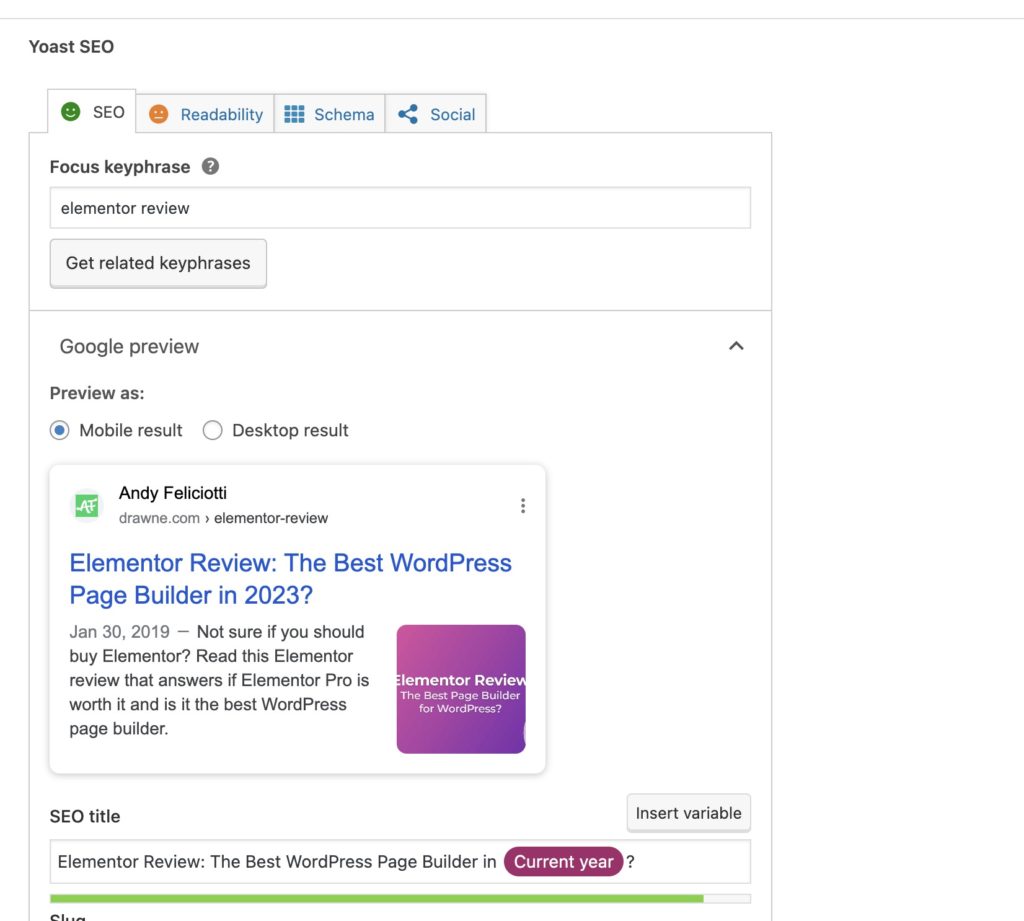
A theme sets your ceiling, but you still need an SEO plugin to handle titles, meta descriptions, sitemaps, and structured data. Yoast SEO and Rank Math both do this well, and either is fine. What matters more is that your theme stays out of their way rather than emitting competing markup.
Can AI be used to improve SEO?
Yes, for research, outlining, and editing. It is much weaker at producing publishable drafts on its own, and Google has spent the last two years demoting sites that treated it that way. Tools like RightBlogger speed up the work around the writing while you keep the judgment.
The larger shift is on the other side of the search box. Assistants now answer questions directly and cite a handful of sources, so being readable and quotable matters as much as ranking. That is what the AI search section above is about.
All 37 guides live on the blog.